
Cable Street ninety years on
Date and location shown to current Members and Friends — enter this season's Access Code.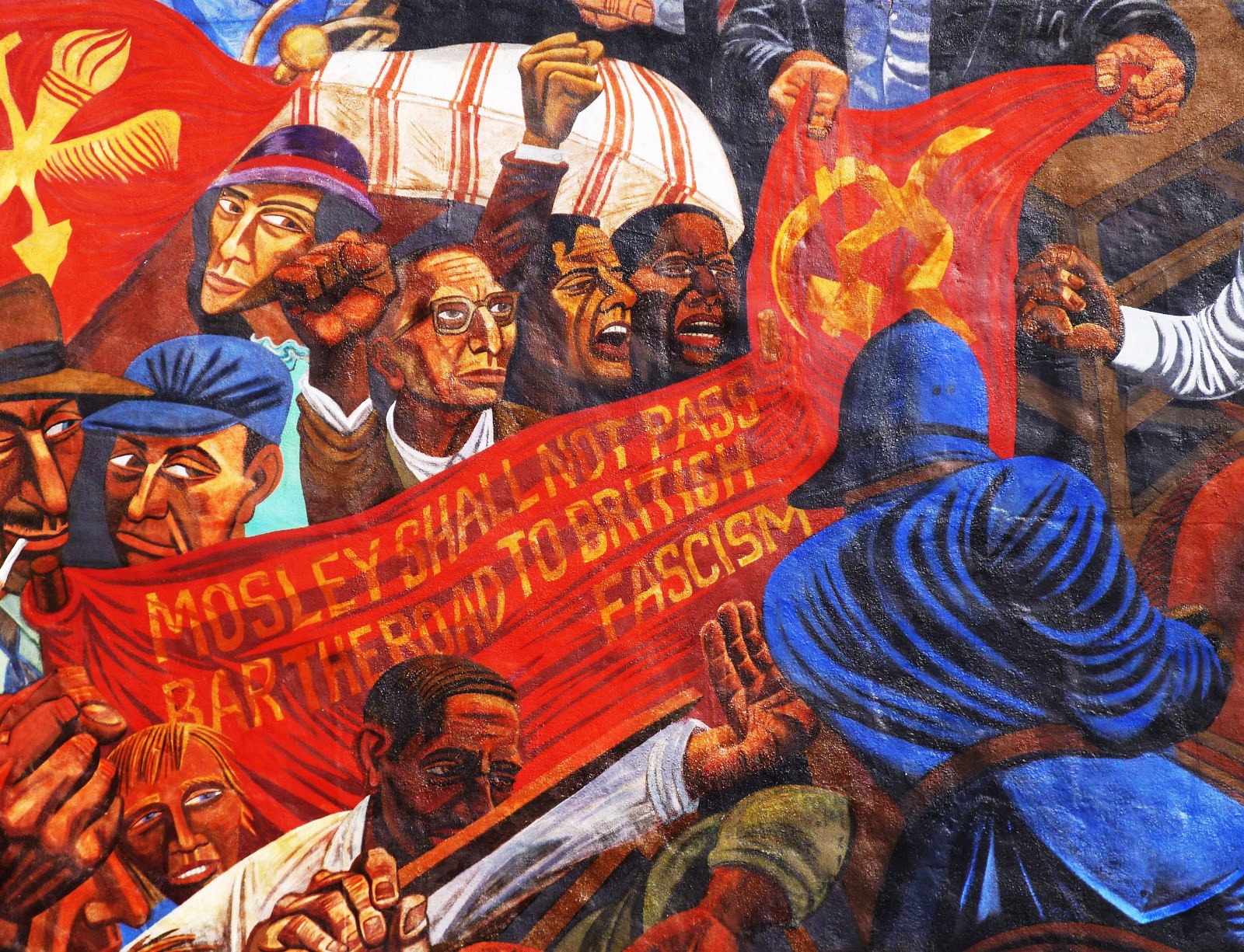
Cable Street ninety years on
Ruth Levitas • Bristol
On 4 October 1936 Oswald Mosley’s British Union of Fascists set out to march through the Jewish East End of London. It was the fourth anniversary of the BUF, and its choice of route a deliberate provocation. There were strong appeals to the Home Secretary Sir John Simon to ban the march but he refused. The Board of Deputies advised Jewish residents to stay home and keep out of trouble. About 250,000 East End residents – Jews, Irish dockers, trade unionists and communists – turned out to stop the march. As the police tried and failed to clear a route for Mosley through Aldgate or through Cable Street, the battle was not between fascists and anti-fascists, but between the residents and the police. The day’s events are commemorated in a mural on the side of St George’s Town Hall in Cable Street. This talk looks at what actually happened on the day, its political context, why this has become such an iconic event, and what might be its significance for us today.
Ruth Levitas is Professor Emerita of Sociology at the University of Bristol and author of several books and academic articles. Her uncle Max Levitas and her father Morry were both at the Battle of Cable Street in 1936, aged 21 and 19. Morry went on to join the International Brigades in Spain. She is currently writing a history of her diasporic extended family, including those who lived in London’s East End.
If you have an event relating to Jewish culture or relevant to DAVAR members that you would like us to publicise, please email us at info@davarbristol.co.uk.